
Z reports - Verofy® transactions
This page describes what a Z report shows, and talks you through how to complete one on your Verofy® Move.
We recommend you run a Z report, followed by a reconciliation report each day - to keep your Verofy® Move running smoothly.
What is a Z report?
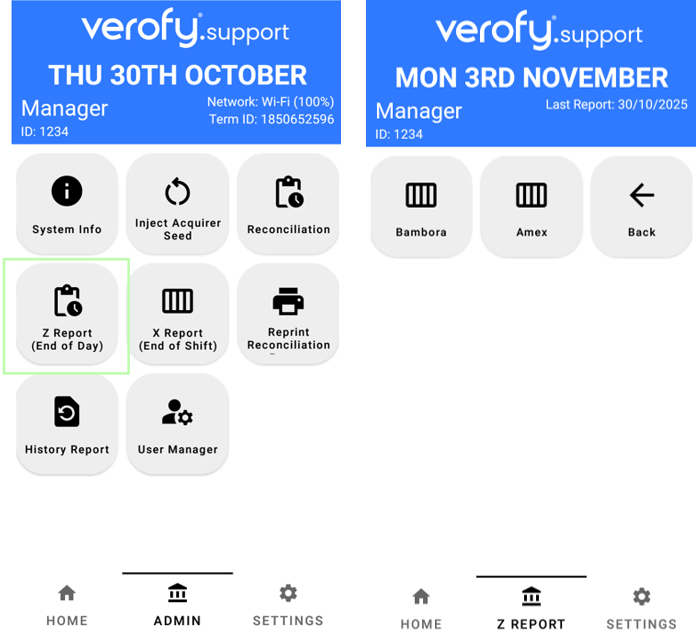
The Z report feature on your Verofy® Move can be found in the Admin menu on your terminal. It provides you with a terminal summary of the transactions volume and quantity taken on your Verofy® Move from the period of your last Z report to now.
If you have your Amex Merchant ID configured on your terminal, you'll see two options when you select the Z report (End of Day) button. For Verofy® transactions, you need to select the Bambora option. After a Z report is done, it 'resets' the totals on the terminal. It does not submit the transactions to the bank - this happens automatically after each transaction.
How does the Z report look?
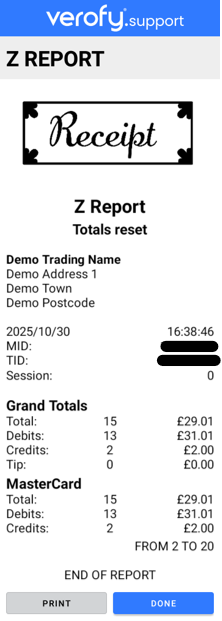
Here is an example of how the Z report will look. You'll see the Grand Totals of debits (sales) and credits (refunds) are shown. There is also a breakdown of the totals across Visa and Mastercard transactions (the example below had only taken Mastercard transactions during this period).
What is the best time to do a Z report?
We would recommend completing a Z report after the last transaction or at the time of the banking window (11:59PM GMT). This allows accurate reporting so you can easily compare the settled batches you receive with the figures on your Z reports.
Whilst the Z report gives you the terminal summary, we also recommend running the reconciliation report each day as this gives the terminal summary and compares this against what the acquiring bank totals are for this period.
How often should you run a Z report?
Whilst there is no requirement to run a Z report everyday, we would recommend this as best practice.